How Secret Motivations Create Productive Conflict in Training Games
Six secret motivation cards make a training game argue like a real team. The design behind Operation Aetherfall and how to build a motivation set of your own.
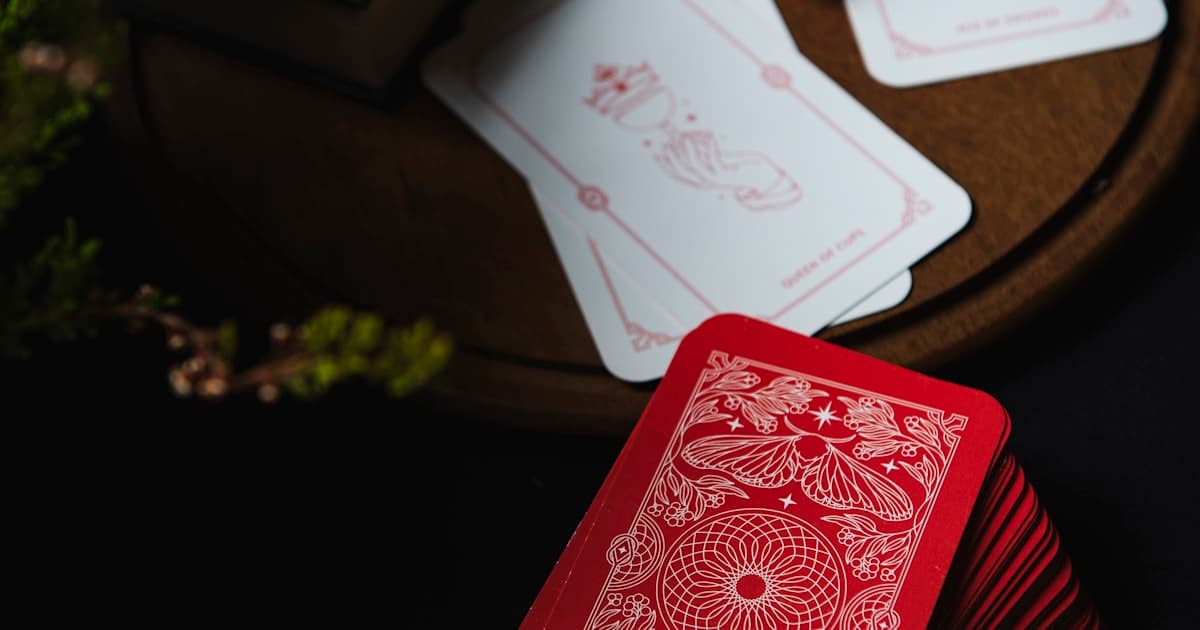
Every player at an Operation Aetherfall table starts the day holding two cards they can't show anyone. The first names a motivation – the thing their character wants most out of the mission. The second holds a piece of information nobody else at the table has. Six players, six motivations, six secrets. The briefing hasn't started yet, and the team is already being pulled in six directions.
That's the mechanic, and it's most of the answer to why hidden role games work for team building. Real teams are hidden-information systems. The colleague resisting your plan has reasons they haven't said out loud – a reprimand six months back, a promotion riding on this quarter, a private worry about who gets hurt if this goes wrong. A secret motivation set rebuilds that structure inside a game, then makes surfacing the hidden layer the only way to win. Players end up asking what's actually driving each other's positions for the same reason they'd need to at work: nothing else moves the group forward.
Adam White and I built this mechanic for Operation Aetherfall, the tabletop conflict-training scenario we've now run through two full pilots. (The complete run-of-show – framing, safety tools, rules teaching, debrief – is in our guide to running a tabletop RPG training session.) Adam's the game designer of the two of us – a licensed counselor, Game to Grow-trained, and an electrical engineer for thirteen years before any of that. I'm a product manager. The cards are where our two jobs met: his character design, my two decades of watching real teams argue. This article is about that design layer – what's on the cards, why hidden information beats assigned roles, and how to build a motivation set for your own exercise.
What's on a secret motivation card?
Each card names three things: what your character wants, what that makes you push for, and what it makes you resist. Here's the full set from Operation Aetherfall – six motivations, one per player, handed out face down before the mission briefing.
| Motivation | Pushes for | Resists | The workplace version |
|---|---|---|---|
| Urgency Above All | Sticking to the objective; aggressive, high-risk approaches | Waiting, double-checking, careful sequencing | The deadline owner. Delays feel like failure. |
| Promotion-Oriented | Executing the mission exactly as defined | Rescues, extra work, optional intel | Advancement depends on the boss's approval. Scope is sacred. |
| Humanitarian Conscience | Verification and safer methods | The logic of "acceptable losses" | Wants ethical risks discussed out loud, even when it slows progress. |
| Reputation Protection | Documentation, witnesses, defensible decisions | Improvisation, morally gray optics | Recently burned. Won't absorb blame for someone else's gamble. |
| Team Preservation | Redundancy, backup plans, slower advances | Splitting the group, high-risk heroics | Everyone comes home. Team cost gets weighed before everything else. |
| Control & Predictability | Methodical, controlled approaches | Experimental tactics, unstable magic | Known outcomes over bold plays, every time. |
Two design details do most of the work here. The motivations aren't mutually exclusive – no card contradicts the mission – but they will pull the team in different directions at every decision point, which is the exact language in our design document. And every card names resistance, not just desire. A character who wants speed is mildly interesting. A character who experiences double-checking as failure will start an argument inside ten minutes.
Notice what's missing: a villain. No traitor card, no saboteur. Every motivation is one a reasonable professional could hold, which comes straight from our design checklist – characters need genuinely competing interests, not manufactured disagreements. Six people who all want the mission to succeed, holding six different definitions of success. That's not a plot twist. That's Tuesday.
Why do secret motivations beat assigned roles?
Assigned roles produce theater; secret motivations produce advocacy. Tell someone "you play the skeptic today" and everyone at the table knows the skepticism is a costume – it gets discounted the moment it appears, the way groups learn to wave off an appointed devil's advocate. A player whose private card says delays feel like failure isn't performing urgency. Within the game, they have urgency, and the table has to deal with it the way you deal with a real colleague: by figuring out what's underneath the position.
The realism argument goes a layer deeper. In hidden role games of the Werewolf tradition, secrecy means deception – someone at the table is lying to you. That's a good party game and a different skill: deception detection, not conflict resolution. In Aetherfall, nobody lies. The hidden layer isn't identity, it's motivation, because that's the hidden layer real teams have. Your coworkers aren't secretly traitors. They're openly teammates with unstated interests.
Hidden information also fixes a facilitation problem that has nothing to do with realism. The research synthesis we built this on – 11 reports across 200+ academic sources – names the Loudest Voice Problem: one or two participants drive every decision while the rest disengage. Its listed prevention is hidden information itself. When each player holds knowledge the group needs and nobody else has, a dominant player can't quarterback the table, and the quiet player's contribution stops being optional.
None of this works unless the fiction produces real pressure – the case for that, what researchers call psychological fidelity, is laid out in whether a tabletop RPG can teach conflict skills. The short version: a fantasy scenario teaches when it evokes the same cognitive and emotional processes as the real situation. Each motivation on that table is a workplace pressure wearing armor.
The mission can't succeed unless the secrets surface
The motivation cards create friction; the information cards make resolving it mandatory. Alongside their motivation, each Aetherfall player holds one piece of intel. One knows the army's Research Division suspects a fatal flaw in the superweapon's underlying theory. One has structural engineering experience and can recognize that the engine room is too fragile for brute force. One knows a stretch of battlefield is contaminated with magical fallout that could hurt the party – or mask its approach. One holds a partial enemy security phrase that might bluff the team past checkpoints, or get everyone compromised. One has diplomatic back-channels suggesting factions inside the enemy army oppose the weapon too.
And one player knows the shutdown sequence. Through a forbidden relationship with someone in the enemy army – contact that would get their character in real trouble if revealed – they hold stolen notes naming the exact order for disabling the ENGINE's subsystems: Mana-Flux Regulator, then Cooling Substation, then Command Bridge. Wrong order, catastrophic runaway. The one genuinely safe ending the scenario offers is unreachable without that sequence. The mission's best outcome sits behind a piece of information that costs something to share.
That's the design principle instructional researchers call intrinsic integration: the learning objective embedded in the core gameplay loop rather than bolted on. The test comes from the design guide I wrote for Adam – does the scenario create conditions where practicing the skill is the natural, advantageous thing to do within the game? The bolt-on version, pausing play to announce "now let's practice active listening," breaks immersion and teaches game compliance instead of transferable behavior.
The skill in question is interest-based problem framing: moving a disagreement from arguing over positions to investigating the motivations underneath them. It's the most teachable conflict skill on record – a meta-analysis of 17 studies found a large training effect (g = .72), and more than 80% of trained professionals report long-term use. The cards make it the winning move. Questions straight off our player reference – "What risk are you most concerned about right now?" "What are we giving up with this option?" – are the only reliable way to find out what your teammates are holding. Ask them, and the flaw, the fallout, and the sequence come out. Skip them, and the team walks into a building it doesn't understand.
How do you design a motivation set for your own exercise?
Start from the decisions, not the characters. List the choices your scenario forces – route A or route B, fast or careful, ask permission or beg forgiveness – and check every motivation against them. The set is right when each decision splits the table at least two ways. In our pilots, one mid-game choice about using that possibly-compromised security phrase reliably split the motivations three or four ways, and it generated more useful conflict than anything we scripted.
Write each motivation as a push and a resist. Desire alone doesn't create friction. "You value safety" sits quietly in a player's pocket all session; "you resist splitting the group and high-risk heroics" collides with the plan the moment somebody proposes heroics.
Keep every motivation defensible. The moment one card reads as the jerk card, its holder performs villainy instead of advocating honestly, and the group writes them off. You want six positions a reasonable person would hold, so the friction comes from the collision rather than from a designated troublemaker.
Dress real pressures in fictional clothes. Deadline pressure, career stakes, ethical worry, blame aversion, protectiveness, risk aversion – our six are ordinary workplace forces with the serial numbers filed off. Participants should recognize the pressure without feeling like the scenario is about them. That protective distance is what makes honest engagement possible.
Then add the information layer, and price at least one secret. Free information gets shared casually and teaches nothing. Information with a personal cost – our forbidden-relationship card – teaches what sharing requires on real teams: trust that the group won't punish whoever says the inconvenient thing out loud.
Last, aim the debrief at the cards. Ours ends with a question I'd put on the wall of any retro room: if a decision meant someone had to sacrifice their motivation, did it still feel like forward progress? The full structure is in our guide to debriefing a training exercise.
Which motivations generate the best friction?
Two pilots in, the pairings have taught us more than the individual cards. Urgency Above All versus Team Preservation is the loud pair – speed against safety, colliding early and often. It's legible friction, which makes it good warm-up material: everyone understands the trade, the argument surfaces fast, and the group gets practice on a disagreement that doesn't cut deep.
Promotion-Oriented versus Humanitarian Conscience is the sharp pair. Scope against conscience doesn't split down the middle – you can't do half a rescue – and it's the collision that pushed our pilot groups past debate tactics and into genuine interest-based questions, because neither side could win on volume. It was also the pairing participants recognized most readily from their own jobs.
Reputation Protection turned out to be the sleeper. It's quiet friction: the character doesn't oppose any particular plan, they just want explicit agreement, clear reasoning, and witnesses before anyone takes a risk. The group feels the drag before they can name its source. Watching a table slowly work out that one member's caution is really self-protection – and then ask about it instead of steamrolling it – may be the most workplace-realistic moment either pilot produced.
Control & Predictability generated the least drama and the most consistency: a steady vote for the known path at every junction. Every table needs one.
Real teams never get to flip their cards face up. Game tables do – by the debrief, every motivation is out in the open, and four hours of baffling arguments suddenly read differently. Then somebody connects a card to a person they work with, or to themselves, and the room gets quiet for a second. That pause is what the whole design is for. The cards are just paper.
More from Facilitation

Logistics for a Game-Based Training Day: People, Time, Room, Materials
The planning checklist behind a 7.5-hour game-based training day – group size, timing budget, breaks, room setup, printed materials, and facilitator prep.

How to Frame a Roleplay Exercise So Adults Actually Engage
The pre-game briefing decides whether adults commit or cringe. The scripts from our Operation Aetherfall pilots, the psychology, and a ten-minute checklist.

How to Run a Tabletop RPG Training Session at Work
A facilitator's guide to running a tabletop RPG training session at work – materials, framing, safety tools, teaching rules to non-gamers, and the debrief.
Put this into practice
Operation Aetherfall is a complete, pilot-tested scenario kit — facilitator guide, printable table pack, and assessment set — for running this kind of training with your own team.