How to Run a Tabletop RPG Training Session at Work
A facilitator's guide to running a tabletop RPG training session at work – materials, framing, safety tools, teaching rules to non-gamers, and the debrief.
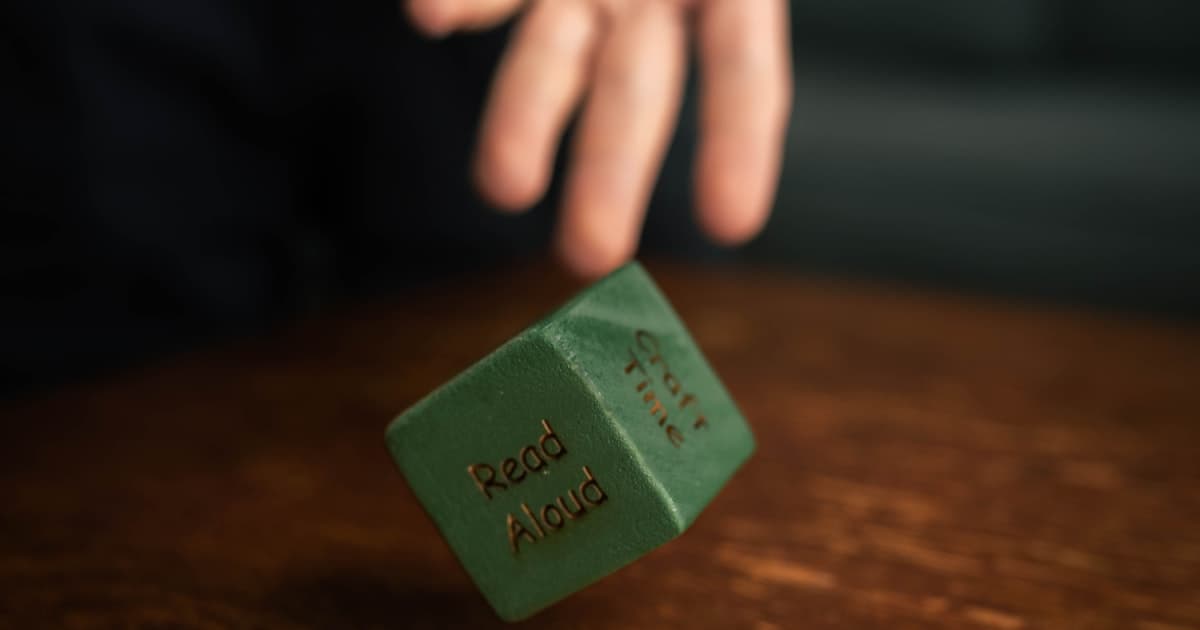
Our second pilot of Operation Aetherfall ran about seven and a half hours. Four of those were gameplay. The other three and a half went to everything around the game: an hour of pre-game instruction, 30 minutes of rules teaching, a 90-minute debrief, and roughly 35 minutes of breaks. Nearly half the day spent not playing.
That ratio is the short answer to how you run a tabletop RPG training session at work. Send pre-work a few days ahead. Frame the session so adults feel safe engaging honestly. Teach just enough rules to play. Run the game while quietly noting the moments that matter. Then protect a structured debrief – at least a quarter of your total time – where the experience gets converted into specific commitments. The game generates raw material. The structure around it turns that material into something people still use a month later.
Adam White and I built this format together and ran it through two pilots. Adam is a licensed professional counselor and a far more experienced game master than I am; I'm a product management consultant, not a game designer. Our first pilot proved the game worked as a game – real disagreements, real pressure. What it lacked was the instructional wrapper. People had a great time, and most of the learning stayed in the room. The second pilot wrapped the same adventure inside assessments, scripted framing, and a three-phase debrief, because a good game experience and a measurable learning outcome are two different things. This guide is the run-of-show we landed on.
What do you need to prepare before the session?
Preparation falls into three buckets: printed materials, pre-work for participants, and prep for you as the facilitator.
Here's the materials list from our second pilot, built for six players running a simplified Level 1 Daggerheart scenario:
- Six pre-generated character sheets, cut down to half a page each
- A secret motivation card and a secret information card for every player, printed separately and handed out face down
- Two reference cards per player: our "From Strong Ground" card of conversation-opening phrases, and a positions-vs-interests quick reference
- Written reflection cards and implementation intention cards for the debrief
- One X-Card, placed in the center of the table
- Dice, enemy stat blocks, a digital encounter manager, pens, and a notepad for the facilitator
The notepad matters more than it looks. During play, part of your job is jotting down three to five specific moments – a question that changed a conversation, a decision and how the group actually reached it, someone holding back when they clearly had something to add. Generic debrief questions produce generic answers. "That moment when Bramm pushed back on Korr's timeline" produces real analysis.
Pre-work is a single item: a pre-game assessment sent three to five days before the session, capturing how each participant currently handles disagreement. It's a baseline, not a test, and without it you'll never know whether anything shifted. We covered the instrument design in our guide to pre- and post-training surveys.
Your own prep is unglamorous: read the session plan and the adventure the day before, and know in advance which decision points are supposed to generate conflict so you recognize them when they arrive.
How do you get adults to take a game seriously?
Tell them the truth before you ask them to play. Our framing block runs about fifteen minutes, and the opening line does most of the heavy lifting: "This isn't a lecture about conflict. You're not going to sit through slides about communication styles or take a personality assessment. Today is practice."
Then be honest about limits. We say directly that a single session builds awareness and produces one specific thing to practice – nobody masters conflict in a day. Adults have sat through oversold workshops before. Underpromising is more honest, and it lowers the resistance in the room. (If you're weighing whether a game is even the right format for your goal, we've written about when game-based training is the wrong tool.)
Make participation genuinely voluntary, and say so out loud: anyone can shift into an observer or advisor role, take a break, or engage at whatever level feels right, and nobody gets called out for adjusting. The research base we built this on – 11 reports synthesizing more than 200 academic sources – flagged mandatory participation as a failure mode that measurably backfires.
The last piece of the pre-game hour is a 30-minute core concepts block, and the discipline here is brevity. We introduce exactly two skills. First, positions versus interests: a position is a preferred solution ("we should do X"), an interest is what's underneath ("I need confidence this won't blow up"), and positions gridlock while interests open possibilities. It's the most teachable conflict skill on record – a meta-analysis across 17 studies found a large training effect (g = .72), and more than 80% of trained professionals report still using it long-term. Adam's favorite phrase for it – "Oh, that sounds like new information to me" – is the model response we want people reaching for. Second, data-first framing with authority: "Here's what we learned that concerns us" invites a conversation, where "You're wrong about this" triggers defensiveness. We hand out the From Strong Ground card, highlight three or four phrases, and stop. Everything else – consensus procedures, avoidance theory, escalation patterns – waits for the debrief. Experience first, framework second.
One more thing on why the fantasy setting isn't a gimmick. The research kept pointing to psychological fidelity over surface realism: a simulation teaches when it evokes the same cognitive and emotional processes as the real thing, and there's a Goldilocks zone of fictional distance. Too close to your actual workplace and the protective fiction collapses – people feel exposed. Too fantastical and they treat it as entertainment, playing the mechanics instead of practicing the skills. A military briefing about resources, loyalty, and a commander with incomplete information sits in the middle: structurally parallel to work without being a workplace simulation. Whether that translates into real conflict skills is a fair question, and we've laid out the evidence on whether a tabletop RPG can teach conflict skills separately.
What safety tools does a workplace RPG session need?
At minimum, an X-Card and a real opt-out. The X-Card is a single card placed in the center of the table, introduced with a twenty-second script: if anything during the game crosses a line for you, for any reason, tap the card. No explanation needed – we adjust and move on. It's a standard tool from the tabletop community, and its real work is done for the people who never touch it. Knowing the exit exists removes the background worry about where the fiction might go, which is exactly what frees people to engage.
The opt-out is the voluntary-participation structure above, restated at the table so it's concrete: observer role, advisor role, break, partial participation.
The third safety tool is you. During play you're balancing three priorities – game flow, learning moments, psychological safety – and when they conflict, safety wins. Every time. A brilliant learning moment isn't worth a participant who shuts down.
How do you teach the rules to non-gamers fast?
Budget 30 minutes and cut everything that isn't required to play. We run Daggerheart at Level 1, simplified, and the walkthrough covers five things: how skill checks work, attack rolls and damage, stress and hit points, a quick pass at the Hope and Fear economy ("enough to play, not to master" is the actual note in our session plan), and each player's own abilities from their half-page sheet. Everything else is the GM's problem, on purpose. The goal is to keep the cognitive load of mechanics low so mental energy goes toward the interpersonal dynamics – which is the entire reason everyone's in the room.
Then the secret cards. Each player gets two to three minutes to privately read a motivation card (what their character cares about most) and an information card (something their character knows that nobody else does). The instruction that goes with the motivation card is worth quoting, because it does a lot of work: "Lean into it – even if it creates friction with the group. That friction is the point." Hidden information also solves the loudest-voice problem structurally. When no single player has the full picture, nobody can quarterback the table.
How do you run the game without breaking immersion?
Intervene from inside the fiction. The GM role hands you tools ordinary training doesn't have: an NPC can redirect a conversation, new intelligence can drop at the right moment, time pressure can tighten or ease, and an NPC can turn to a quiet participant and ask what their character thinks. In our briefing scene, the whole design depends on players challenging their commander, Korr, whose plan contradicts information several of them are holding. When a group hesitates, we don't pause the game and announce a managing-up exercise. A second NPC, General Ironvein, applies pressure inside the story instead – escalating, if needed, to a line like "Incomplete information is normal. Ignoring information is a choice."
The one fully out-of-frame move in our kit is freeze-and-explore: a brief pause to ask what everyone's thinking in a genuinely rich moment. We cap it at two or three uses per session. And if you're worried that any interruption ruins the learning, a 2019 randomized controlled trial found no difference in learning outcomes between stop-and-go debriefing and saving discussion for the end. What matters is how you interrupt, not whether.
Knowing when to do nothing is just as important. If the group is struggling productively, the struggle is the learning. If someone's making a "mistake" that will become a rich debrief conversation, let it play out. You step in when a participant is visibly shutting down, when one voice is drowning out the rest, or when the group is about to skate past a moment the whole session was built around.
That last one is why you map your conflict-generating moments in advance. In our scenario, a mid-game decision about whether to use a possibly-compromised security passphrase carries asymmetric stakes – spectacular success or catastrophic failure – and it reliably splits the players' hidden motivations three or four ways. It's the strongest conflict generator in the session. When a group starts to rush past it, we slow them down, because that argument teaches more than any lecture on competing priorities.
My favorite example of building the lesson into the game is Overseer Vane, a villain in the final act. His "Fear" ability forces a player to mark Stress if they can't justify their last action to their teammates. It's a combat mechanic that happens to be accountability practice – real-time articulation of reasoning under pressure, the exact thing people fail to do in workplace conflict. His table banter is pointed: "Do your teammates know why you just did that? Because I'm curious." Vane is the most instructionally useful jerk we've ever written.
How do you run the debrief?
Give the debrief at least a quarter of your total session time, and if the day runs long, shorten the game – never the debrief. That's not a preference; it's the strongest finding in the research we built on. The simulation generates raw experience. The debrief converts it into transferable insight, improving performance by 20-25% in the meta-analytic literature.
Don't start it the moment the game ends, either. We take a deliberate ten-minute break first, because people who are still emotionally activated from gameplay can't analyze their own behavior. Let them stretch and talk about the fight with the security construct. Then begin.
Ours runs 90 minutes in three phases. Reactions (10-15 minutes): feelings only. "What was the most intense moment for you?" "What surprised you about yourself?" If someone jumps to analysis, gently park it. Then a five-minute written reflection with three prompts, done privately before any group discussion, so quieter participants get to organize their thoughts and the loudest voices don't set the frame. Analysis (40-50 minutes): this is where the notepad pays off, working through the specific moments you captured – the Korr confrontation, how the passphrase decision actually got made, what Vane's challenges felt like. The technique we lean on is advocacy-inquiry: pair an observation with genuine curiosity. "I noticed you led with the structural data instead of challenging his plan – help me understand what drove that."
Application (25-30 minutes) is the phase I'd defend hardest. Each participant writes an implementation intention – "When I notice X, instead of Y, I will Z" – then shares it with the group and pairs up with an accountability partner for a two-week check-in. The numbers are why we're rigid about this: written if-then plans roughly double transfer, from about 30% to 67%, and sharing a commitment publicly lifts follow-through from about 43% to 76%. Help people sharpen vague plans into specific ones. "I'll handle conflict better" isn't a plan. "If I feel the urge to stay quiet when I disagree in a meeting, I will say: I'm working from different assumptions – can I share them?" is.
The full structure – question banks, phase timing, what to do when a debrief goes sideways – is in our guide to how to debrief a training exercise. If you take one thing from this article, take the ratio. The debrief isn't the wrap-up. It's the payload.
What happens after the session?
The session ends and the transfer problem begins. By default, only 10-15% of trained skills transfer to workplace performance, and interpersonal skills decay within 30-90 days. That research is sobering enough that we wrote about it separately in why workplace training doesn't stick – and it's why the follow-up is part of the session design, not an afterthought.
Our sequence is small and specific. A post-game assessment on-site, using the same instruments as the pre-game baseline, compared for directional shifts rather than correct answers. A one-week survey, about five minutes, asking whether the if-then plan is working and what's getting in the way. And the two-week accountability check-in participants committed to during the debrief – one peer asking another "How's your plan going?" In the transfer research, peer support predicts sustained behavior change better than supervisor or organizational support. The whole intervention is one text message.
Two pilots in, what most surprised me is where the work lives. Everyone assumes the hard part is the game – the adventure, the NPCs, keeping six people engaged for four hours. Adam makes that part look easy. What separated our second pilot from our first was everything wrapped around those four hours: the assessment sent out days before anyone arrived, the fifteen minutes of honest framing, the card that says "when I notice X, I will Z," the check-in scheduled before anyone left the room.
The game gets the credit. The structure does the work.
More from Facilitation

Logistics for a Game-Based Training Day: People, Time, Room, Materials
The planning checklist behind a 7.5-hour game-based training day – group size, timing budget, breaks, room setup, printed materials, and facilitator prep.

How to Frame a Roleplay Exercise So Adults Actually Engage
The pre-game briefing decides whether adults commit or cringe. The scripts from our Operation Aetherfall pilots, the psychology, and a ten-minute checklist.

Safety Tools for Workplace Roleplay: X-Cards, Opt-Outs, and Check-Ins
Why safety mechanics matter more at work than at hobby tables – the X-Card script from our pilots, opt-out roles, check-ins, and the failures they prevent.
Put this into practice
Operation Aetherfall is a complete, pilot-tested scenario kit — facilitator guide, printable table pack, and assessment set — for running this kind of training with your own team.