Psychological Fidelity: Why a Fantasy Scenario Can Teach Real Workplace Skills
Psychological fidelity, not surface realism, is what makes simulation training work – why a fantasy briefing can train you for a real meeting with a VP.
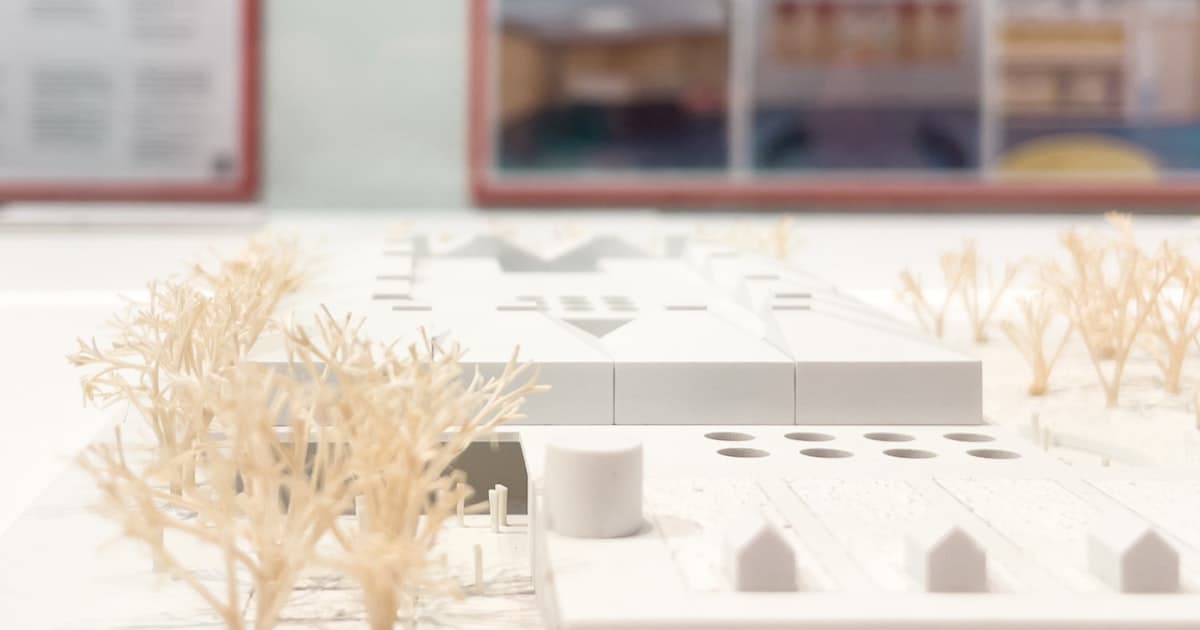
There's a briefing scene early in Operation Aetherfall, the training scenario Adam White and I have now run through two full pilot sessions. The players bring Commander Korr intelligence that undercuts his plan, and he sets it aside. No conference room. No org chart. A star map, a fantasy officer, and six people at a table deciding whether to keep pushing a superior who's stopped listening.
That scene works as workplace training because of a concept called psychological fidelity – the degree to which a simulation evokes the same cognitive and emotional processes as the real situation it's preparing you for. Decades of simulation research across military, medical, and business settings converge on one finding: psychological fidelity, not physical resemblance, is what drives skill transfer, especially for interpersonal skills. A scenario that looks nothing like your office can still train you for your office, provided it makes you think, feel, and decide the way you do there.
Transfer – whether trained skills actually show up at work afterward – is the metric that matters, and it's the one most training fails (we've written about why workplace training doesn't stick). So the useful question about any simulation isn't "does it look real?" It's "which kind of fidelity does it have, and is it the kind that buys transfer?"
What are the three types of simulation fidelity?
Simulation researchers split fidelity into layers, and the split matters because each layer costs a different amount and buys you a different thing.
| Fidelity type | What it reproduces | What it looks like in practice |
|---|---|---|
| Physical | How the environment looks, sounds, and feels | A cockpit mock-up, a replica operating room, a role-play staged in a conference room |
| Functional | How the environment responds to what you do | Controls that behave like the real controls; a system that reacts the way the live one would |
| Psychological | The thinking, emotion, and pressure of the real task | Deciding, under time pressure and with incomplete information, whether to challenge someone with more authority |
Most people evaluating a training program instinctively grade the first row. Does it look like our work? Would our team recognize the setting? Reasonable questions, wrong layer. Rosen and colleagues, who built the framework for psychological fidelity in simulation-based training, showed that simulations with low physical fidelity can achieve high psychological fidelity as long as the tasks stimulate the same cognitive responses as the real-world work. The layers move independently. You can have a gorgeous replica that trains nothing and a card table that trains plenty.
Does surface realism improve skill transfer?
For interpersonal skills, no – across studies of simulation training effectiveness, transfer follows the psychological layer and barely notices the physical one. A systematic review in medical education (Munshi, Lababidi & Alyousef, 2015) found cognitive skill transfer strongly linked to a simulation's cognitive fidelity and apparently independent of its physical and functional fidelity. Harvard's Program on Negotiation documents the same pattern from the business side: negotiation simulations built on genuinely competing interests produce more transferable skills than scripted role-plays, because participants have to develop real strategies instead of performing predetermined ones. The broader case for practice over presentation is in what the research says about practice vs. lecture.
I'm a product manager, not a learning scientist, so before we designed Aetherfall we synthesized the research – 11 reports covering 200+ sources across military, medical, and serious-games literature – and this was the most emphatic finding in the pile: a fantasy tabletop game can produce equal or better transfer than an expensive realistic simulator, provided it creates authentic pressure and decision-making dynamics.
"Authentic pressure" has a concrete definition. The scenario has to reliably produce genuine disagreement between characters rather than scripted arguments, real stakes inside the game's world, time pressure that forces decisions before anyone's ready, and incomplete information that makes trust and communication mandatory. Miss those, and no amount of production value saves you.
Why is a fantasy briefing the same as a meeting with a VP?
Because the parts of you being trained can't tell the difference. When a player decides to push back on Commander Korr, every load-bearing element of the real situation is present. The authority gradient: he outranks you, and contradicting him carries social cost. The framing problem: leading with evidence ("here's what we learned that concerns us") lands differently than attacking his position ("you're wrong about this"), and choosing between those framings under pressure is precisely the skill the scenario exists to exercise. The defensive triggers: the pause before you contradict power, the urge to soften your point into mush, the sideways glance to see whether anyone will back you.
Swap the star map for a product roadmap and Korr for a VP of Sales, and nothing in that paragraph changes.
The pressure is doing real work too. Research on decision-making under time constraints (Kocher & Sutter) found that time pressure produces "a systematic shift toward heuristics of less complexity" – people simplify, and they get more selective about what information they take in. Deliberation degrades exactly when interpersonal skill is most needed, which is true in the game and true in the meeting. A well-built scenario recreates that degradation on purpose, in a room where failing costs nothing. The fuller evidence review of the format is in can a tabletop RPG teach conflict skills.
Is higher fidelity always better?
No – for novices it's often worse. A 2024 study (Davies & Krame) found the best transfer came from matching a simulation's fidelity to the learner's skill level: novices learned better in lower-fidelity environments that isolate the key cognitive demands, while experienced practitioners got more from high-fidelity contexts that challenge their existing mental models. The military has run on this logic for decades – progressive training doctrine starts with tabletop exercises and advances to live simulation later.
Here's the uncomfortable part for anyone shopping for conflict training: at deliberate conflict practice, nearly everyone is a novice. Your team has years of experience with conflict and almost zero practiced repetitions, and those aren't the same thing. Which means a tabletop's low physical fidelity is a feature, not a budget compromise. It strips out the noise and isolates the demand – the moment of disagreement, the framing choice, the decision to speak at all. A high-fidelity replica of your own workplace adds the noise back.
It also adds something worse.
How close to real work should the fiction sit?
The research identifies a Goldilocks zone for fictional distance, with a distinct failure mode on either side.
Too close, and the protective fiction collapses. A scenario that mirrors your actual workplace – same roles, same org chart, colleagues renamed with a wink – stops feeling like practice and starts feeling like exposure. People aren't practicing conflict anymore; they're being watched having it. The distance a fictional frame provides is the mechanism that makes risky practice feel safe, and it deserves its own explanation: aesthetic distance in roleplay.
Too far, and nothing transfers. Make the scenario fantastical enough and participants treat it as pure entertainment – they play the mechanics, chase the loot, crack jokes, and never touch the interpersonal work. The research calls it overdistance. At our table we call it the "just a game" problem.
The zone between is a fantasy setting with structural parallels to workplace dynamics, and Aetherfall's military framing sits there on purpose. Characters face decisions about resources, loyalty, authority, and competing priorities – all structurally parallel to workplace conflict, none of it a workplace simulation. Adam spent 13 years as an electrical engineer before becoming a licensed professional counselor, and calibrating this emotional distance is where the counseling training earns its keep.
How do you evaluate a simulation's fidelity where it counts?
Skip past what it looks like and interrogate what it makes people do. Does disagreement emerge from the structure of the scenario, or does a facilitator have to inject it? Are there real stakes inside the scenario's world – consequences participants will feel? Is there time pressure forcing decisions before consensus arrives on its own? Does hidden or incomplete information make listening and trust mandatory rather than polite?
Then apply the test we use on every Aetherfall design decision: does the scenario create conditions where practicing the target skill is the natural, advantageous thing to do within the game? If people only practice the skill when the facilitator pauses the action and asks them to, the learning is bolted on – and bolted-on learning teaches compliance with the facilitator, not behavior that survives contact with a real Tuesday.
A simulation that answers those questions well will train your team in a spaceship, a castle, or a lifeboat. One that answers them badly won't train anyone anywhere – including in a perfect replica of your own office.
Realism is what a simulation looks like. Fidelity is what it does to you.
More from Learning Science
Implementation Intentions: The If-Then Plans That Double Training Follow-Through
If-then plans more than doubled training transfer in one study – 30% to 67%. What implementation intentions are, how to write one, and eight examples.

Practice vs. Lecture: What the Research Really Says About Learning People Skills
The 75-90% vs. 5-10% retention stat is folklore – we quote it ourselves. Where it came from, and what rigorous research really shows about practice.

Theory First or Practice First? Sequencing a Skills Workshop
The evidence favors practice before theory for adults. What to pre-teach anyway, what the debrief should carry, and a decision guide for workshop designers.
Put this into practice
Operation Aetherfall is a complete, pilot-tested scenario kit — facilitator guide, printable table pack, and assessment set — for running this kind of training with your own team.